
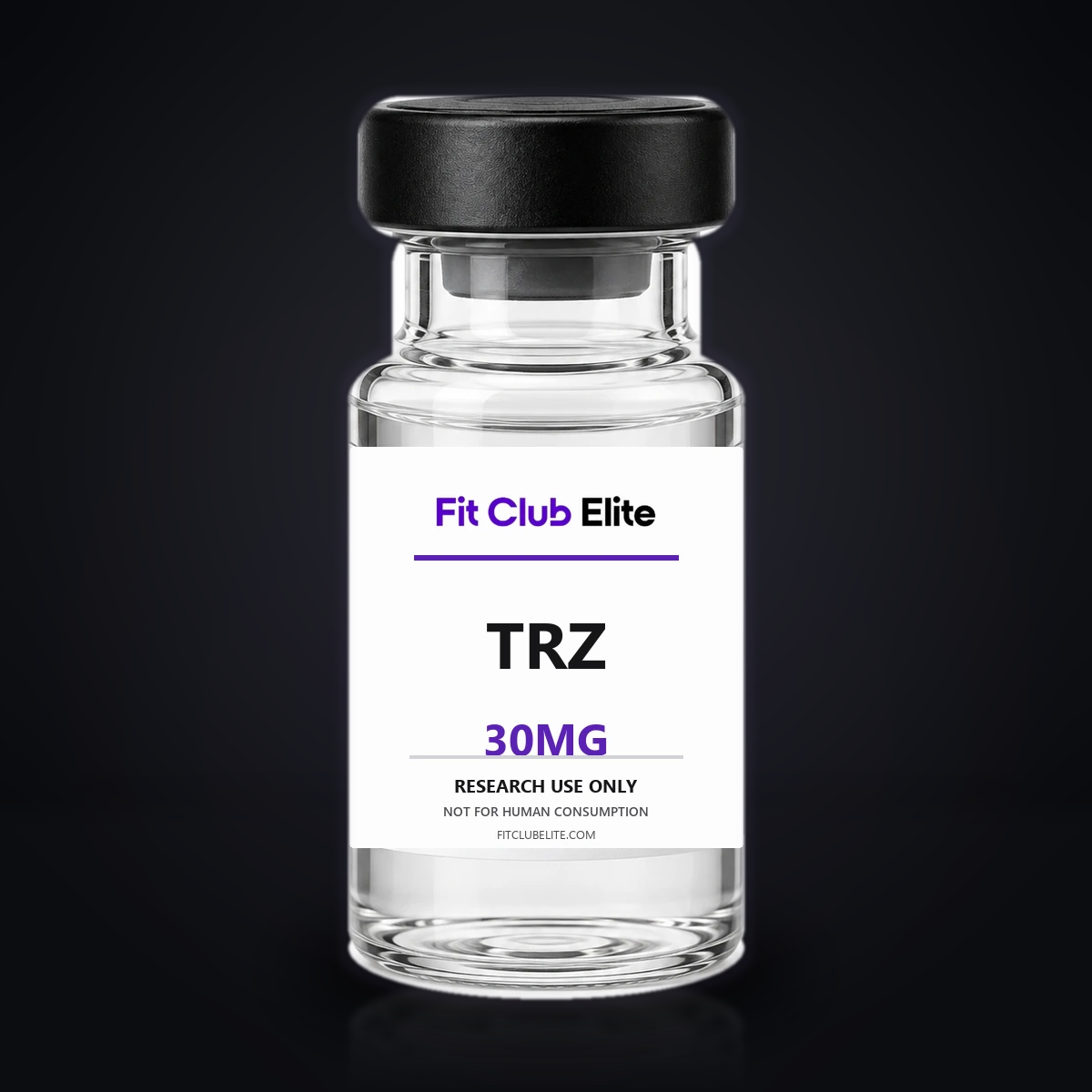
What Is TRZ?
TRZ is an ambiguous commercial abbreviation and does not establish a chemical identity by itself. If the matching Fit Club Elite record confirms tirzepatide, the material is a synthetic peptide engineered to activate both GIP and GLP-1 receptors.
Overview
A verified tirzepatide test article can be used to compare each receptor in isolation and in co-expression systems, following cAMP, receptor occupancy, internalization, recycling, and nutrient-responsive cell signals. Dual-receptor activity should be demonstrated in the actual assay rather than inferred from the abbreviation.
In plain language, verified tirzepatide gives researchers one test article for asking how two related nutrient-sensing receptors behave separately and together.
History
Tirzepatide was developed in modern incretin research using a GIP-based peptide scaffold modified for dual GIP/GLP-1 receptor activity and longer persistence. TRZ, however, is not an official identity name and must be tied to lot-specific analytical documentation.
Research Findings
- Authoritative identity documents describe tirzepatide as a dual GIP-receptor and GLP-1-receptor agonist.
- Receptor-defined assays can separate potency at GIPR from potency at GLP-1R before studying combined signaling.
- The molecule includes a fatty-diacid-linked design associated with albumin binding and prolonged persistence.
- Cellular signaling, animal findings, and approved-drug information do not verify the identity or quality of an RUO product.
Documentation
Available analytical reports apply only to the exact product, strength, and lot identified on each report. A report for one strength or lot must not be assumed to cover another. Contact Fit Club Elite before ordering when a project requires lot-specific documentation.
Use Restrictions
For Research Use Only. Not for human or veterinary use. Not a food, drug, cosmetic, dietary supplement, or household product. Fit Club Elite does not provide medical, dosing, mixing, reconstitution, administration, or end-use guidance. Purchasers are responsible for lawful handling, storage, and use in an appropriate research setting.