
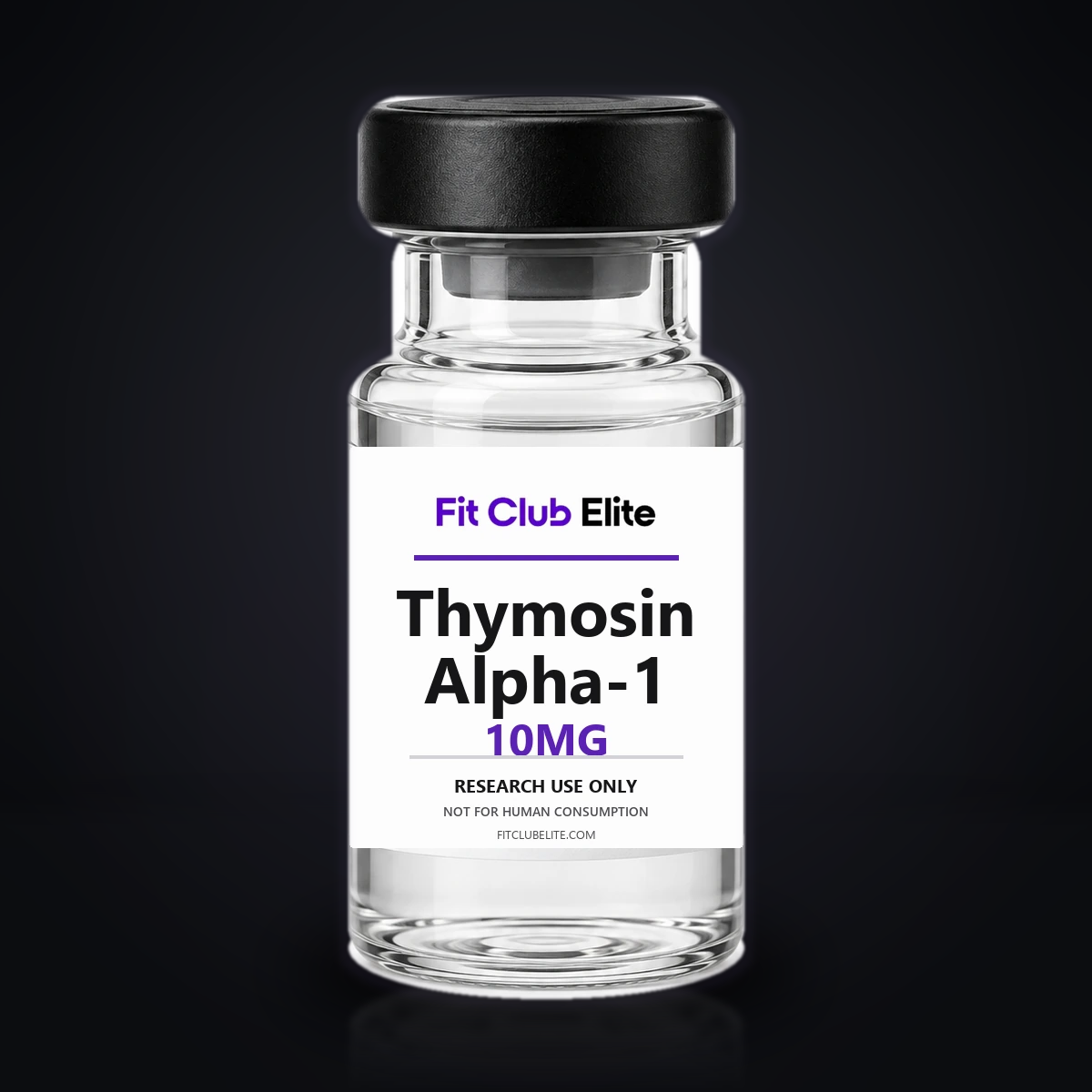
What Is Thymosin Alpha-1?
Thymosin Alpha-1 is a synthetic version of a 28-amino-acid peptide originally characterized from thymic peptide fractions. It is used as a research material for studying communication between innate immune sensing and more targeted adaptive immune responses.
Overview
In laboratory systems, Thymosin Alpha-1 is examined for changes in dendritic-cell activity, Toll-like-receptor signaling, T-cell maturation, and cytokine patterns. The important research question is not simply whether an immune marker rises or falls, but how the peptide changes the balance and timing of signaling across different immune-cell types under a defined stimulus.
Researchers are interested in how this peptide changes the handoff between early immune sensing and the more specialized immune response that follows.
History
Thymosin Alpha-1 was isolated and characterized during thymic-fraction research in the 1970s. Later work shifted from the original mixed thymosin preparations to a defined synthetic peptide, allowing researchers to examine specific receptors, cell populations, and signaling pathways with better experimental control.
Research Findings
- Dendritic-cell studies have reported modulation of Toll-like-receptor-linked signaling under defined experimental conditions.
- Laboratory work has measured changes in dendritic-cell maturation, antigen-presentation markers, and cytokine output.
- T-cell differentiation and CD4/CD8-related population changes are recurring research endpoints.
- Responses depend on the immune stimulus, cell type, species, and timing of measurement.
Documentation
Available analytical reports apply only to the exact product, strength, and lot identified on each report. A report for one strength or lot must not be assumed to cover another. Contact Fit Club Elite before ordering when a project requires lot-specific documentation.
Use Restrictions
For Research Use Only. Not for human or veterinary use. Not a food, drug, cosmetic, dietary supplement, or household product. Fit Club Elite does not provide medical, dosing, mixing, reconstitution, administration, or end-use guidance. Purchasers are responsible for lawful handling, storage, and use in an appropriate research setting.