
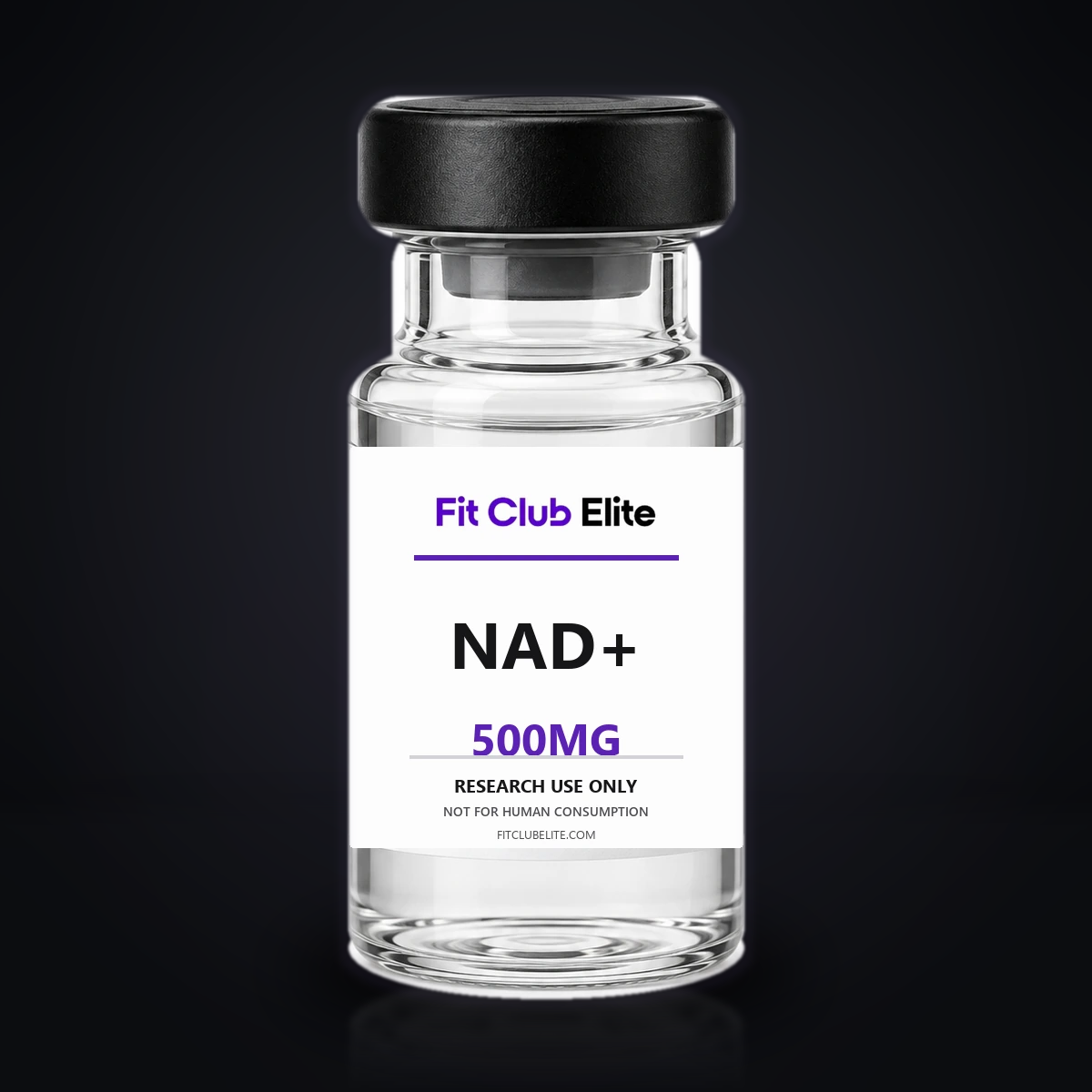
What Is NAD+?
NAD+ is nicotinamide adenine dinucleotide, a coenzyme found throughout living cells. It transfers electrons during metabolic reactions and also serves as a consumed substrate for signaling enzymes including sirtuins, PARPs, and CD38.
Overview
Laboratories use NAD+ to study redox chemistry, energy metabolism, mitochondrial function, DNA-damage responses, and NAD-dependent enzyme activity. In simple terms, it helps researchers connect a cell's fuel-processing chemistry with signaling and maintenance systems. The effect of adding NAD+ depends on membrane transport, cellular compartment, formulation, and the experimental model.
Researchers are interested in NAD+ because it sits at the intersection of how cells move energy, balance oxidation and reduction, and power several signaling enzymes.
History
Arthur Harden and William John Young identified a heat-stable fermentation cofactor in 1906, and later work established the structure and redox role of the molecule now called NAD+. During the twentieth century it became central to biochemical research. More recent work has expanded attention from electron transfer to NAD-consuming signaling enzymes and compartment-specific NAD pools.
Research Findings
- NAD+/NADH measurements are widely used to track cellular redox state and electron transfer in metabolic reactions.
- Sirtuins, PARPs, CD38, and related enzymes consume NAD+ as part of signaling or repair-associated chemistry.
- Cell and organelle assays examine metabolic flux, mitochondrial respiration, and DNA-damage markers as NAD availability changes.
- Extracellular addition does not guarantee a predictable intracellular NAD+ change because uptake and conversion differ among models.
Documentation
Available analytical reports apply only to the exact product, strength, and lot identified on each report. A report for one strength or lot must not be assumed to cover another. Contact Fit Club Elite before ordering when a project requires lot-specific documentation.
Use Restrictions
For Research Use Only. Not for human or veterinary use. Not a food, drug, cosmetic, dietary supplement, or household product. Fit Club Elite does not provide medical, dosing, mixing, reconstitution, administration, or end-use guidance. Purchasers are responsible for lawful handling, storage, and use in an appropriate research setting.