
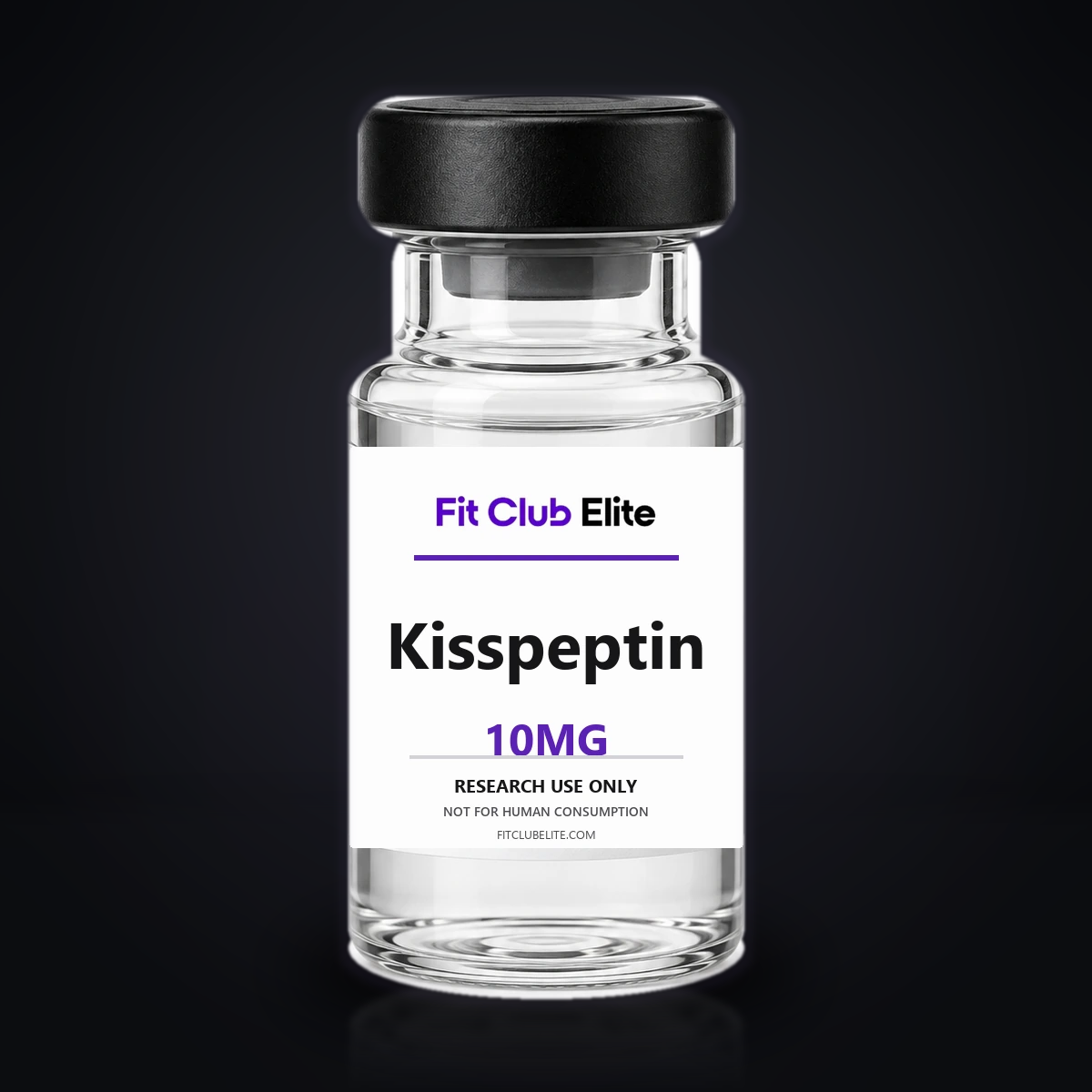
What Is Kisspeptin?
Kisspeptin is the name for a family of peptides made from the KISS1 precursor protein. Active forms include kisspeptin-54, -14, -13, and -10, which share a common C-terminal sequence and signal through the KISS1 receptor, formerly called GPR54.
Overview
Kisspeptin research examines how KISS1R signaling connects neural and endocrine cells, especially upstream of gonadotropin-releasing hormone (GnRH) neurons. Common model readouts include receptor activation, calcium and second-messenger signaling, GnRH-neuron firing or secretion markers, receptor desensitization, and feedback from steroid signals. The exact peptide fragment matters because a product labeled only Kisspeptin does not identify its sequence or length.
Researchers are interested in how the brain passes a timing signal to the endocrine system and how different kisspeptin fragments switch that receptor pathway on.
History
KISS1 was identified in 1996 during metastasis-suppression research. Its peptide products were matched to the receptor then called GPR54 in 2001, and genetic findings reported in 2003 established the pathway as a major subject in reproductive neuroendocrinology. The name kisspeptin now covers several related fragments rather than one single sequence.
Research Findings
- Kisspeptin peptides activate KISS1R, a G-protein-coupled receptor linked to phospholipase-C and calcium signaling.
- Many GnRH neurons express KISS1R, allowing receptor-defined neural models to measure direct signaling responses.
- Genetic and knockout studies established the importance of KISS1/KISS1R signaling in reproductive-axis development and function.
- Fragment length, species, model, and feedback environment can change potency, timing, and desensitization.
Documentation
Available analytical reports apply only to the exact product, strength, and lot identified on each report. A report for one strength or lot must not be assumed to cover another. Contact Fit Club Elite before ordering when a project requires lot-specific documentation.
Use Restrictions
For Research Use Only. Not for human or veterinary use. Not a food, drug, cosmetic, dietary supplement, or household product. Fit Club Elite does not provide medical, dosing, mixing, reconstitution, administration, or end-use guidance. Purchasers are responsible for lawful handling, storage, and use in an appropriate research setting.