
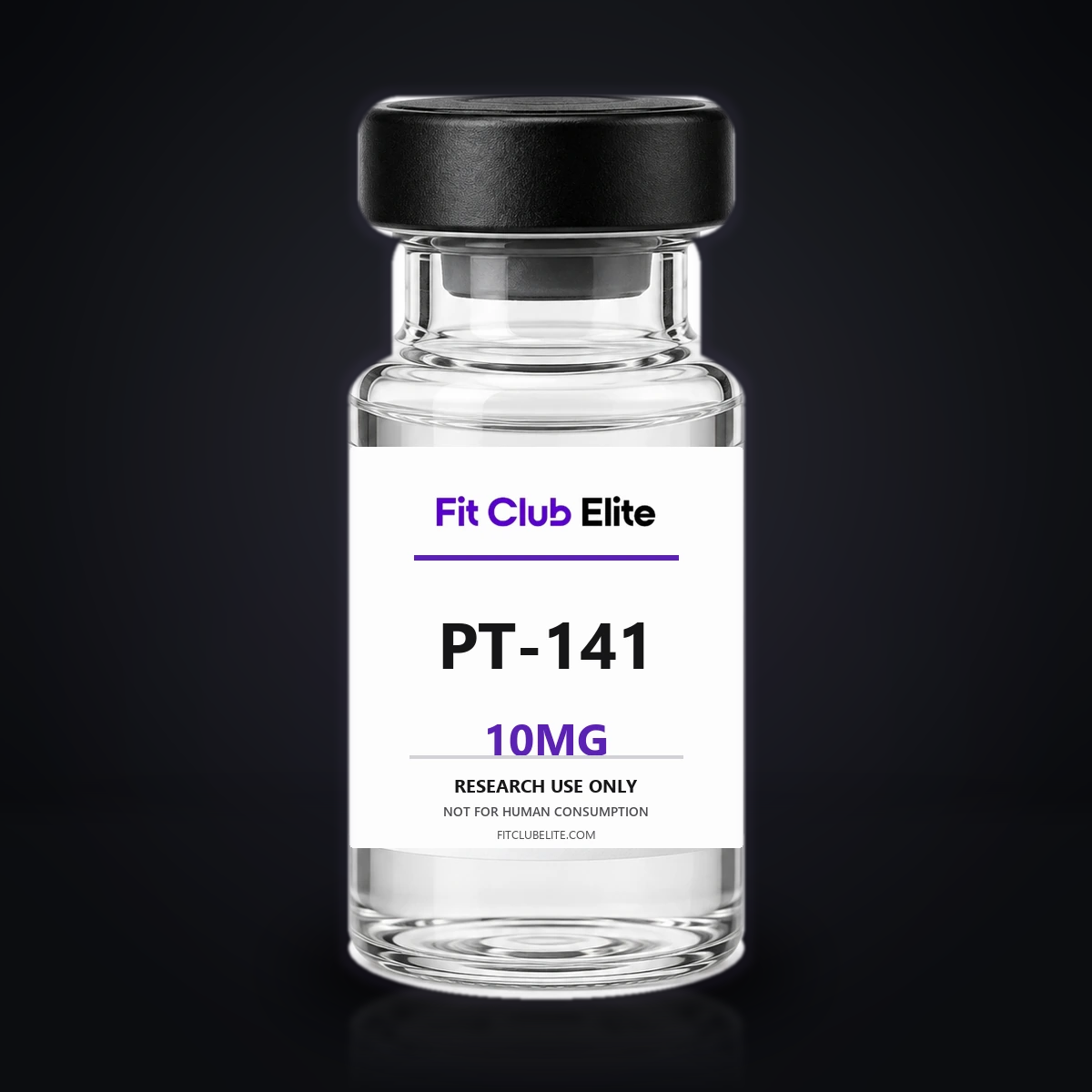
What Is PT-141?
PT-141, also known as bremelanotide, is a synthetic cyclic heptapeptide derived from melanotan-II research. It is used as a ligand for studying melanocortin-receptor signaling, particularly receptor systems expressed in nervous-system models.
Overview
Laboratories use PT-141 to compare melanocortin receptor subtypes, cAMP responses, receptor occupancy, internalization, and neuronal activation markers. Its value as a research material is mapping which receptor systems respond and how those signals develop in a controlled model.
In plain language, PT-141 helps researchers map which members of the melanocortin receptor family respond to one synthetic peptide and what signals those receptors produce.
History
PT-141 was developed from melanotan-II-related peptide chemistry explored by University of Arizona researchers. Structural changes within that cyclic melanocortin framework produced a research ligand with a receptor profile distinct from the native melanocortin peptides.
Research Findings
- PT-141 activates multiple melanocortin receptor subtypes, including receptors studied in central signaling models.
- Receptor-defined cell assays commonly measure cAMP production, potency, and subtype selectivity.
- Neural models examine downstream activation patterns rather than treating receptor binding as a complete behavioral explanation.
- Results depend on receptor expression, model context, comparator ligand, and exposure conditions.
Documentation
Available analytical reports apply only to the exact product, strength, and lot identified on each report. A report for one strength or lot must not be assumed to cover another. Contact Fit Club Elite before ordering when a project requires lot-specific documentation.
Use Restrictions
For Research Use Only. Not for human or veterinary use. Not a food, drug, cosmetic, dietary supplement, or household product. Fit Club Elite does not provide medical, dosing, mixing, reconstitution, administration, or end-use guidance. Purchasers are responsible for lawful handling, storage, and use in an appropriate research setting.